
now booking 2026 speaking dates

What We're Reading
The complete reading list for all twelve months is available inside the IDWA Studio — released monthly throughout 2026 so the texts arrive when you're ready for them, not all at once. What's below is Month One in full.
Twelve months. Twelve themes. Fiction alongside history, image alongside text, each pairing chosen not for opposition but for dialogue across genre, perspective, and form. A few of the voices ahead: Toni Morrison on slavery's long shadow. James Baldwin on nationalism and belonging. Bryan Stevenson on justice and mercy. Robin Wall Kimmerer on land and reciprocity. Octavia Butler imagining the America we might still become. And throughout, the visual work of Faith Ringgold, Jasper Johns, Kerry James Marshall, and others asking what America looks like when you change who's holding the brush.
Each month its own inquiry. Each pairing chosen not for opposition but for dialogue. They are texts that illuminate each other across genre, perspective, and form.
how we choose the books
Every text in this project is chosen for general readers: curious, thoughtful adults. The history books are written for people like you, not for academically trained historians. The works of fiction (and poetry) are chosen to give you an experiential perspective on the monthly themes. The artists are chosen because their work is in genuine conversation with the literary and historical texts, not decorative, not illustrative, but in actual dialogue.
You don't have to read both texts (though you certainly can). Choose one. The monthly video and journal architecture ensures you'll arrive at the same questions either way.
check out month 01 texts below
Chapter (month) 01 Texts
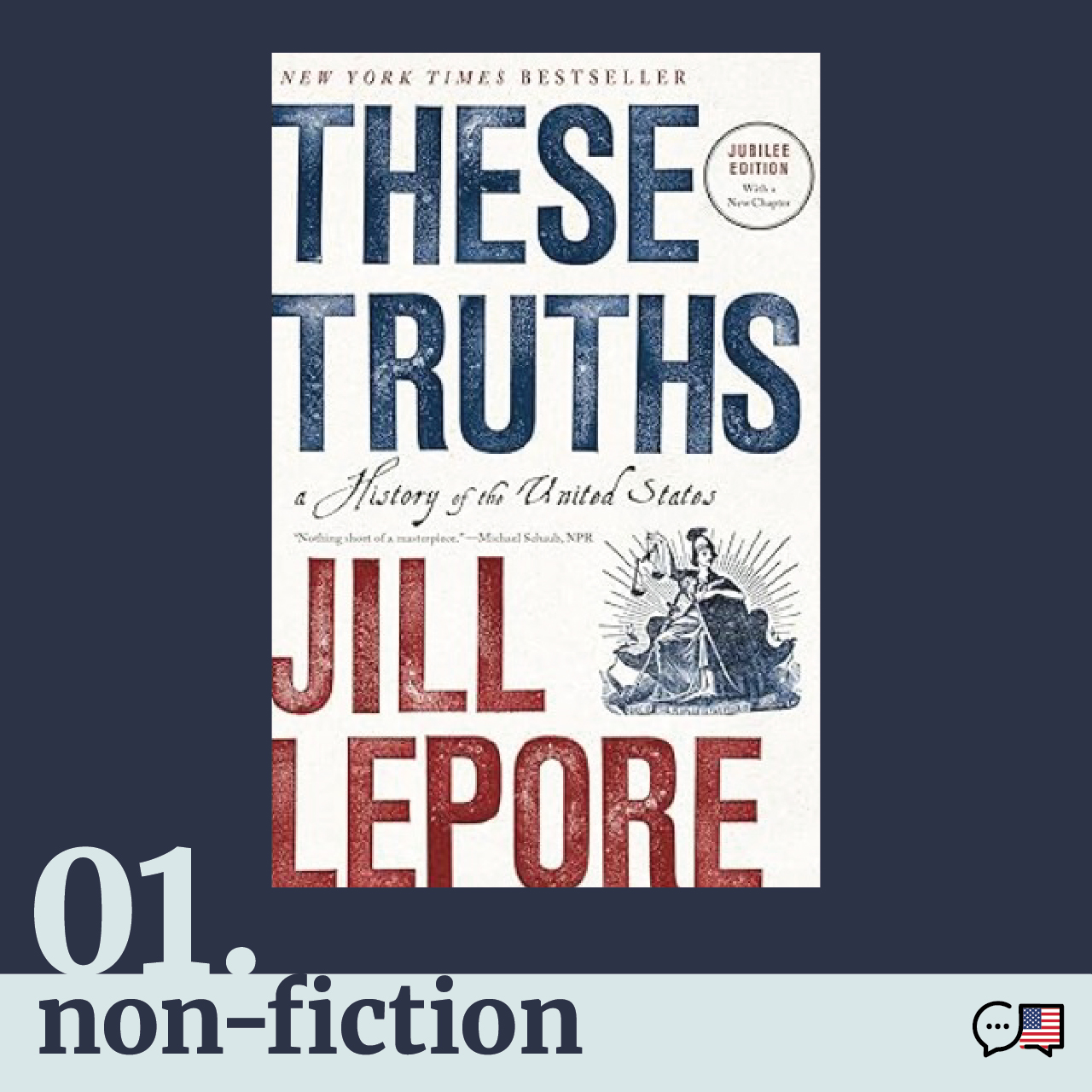
tHESE TRUTHS
Jill Lepore is a Harvard historian who writes for the New Yorker. She organizes the entire sweep of American history around three founding ideals: political equality, natural rights, and the sovereignty of the people. That framework is both the book's great strength — it gives an 800-page history a coherent spine — and its most debated choice. Critics argued that centering founding ideals shaped what she included and what she left out.
We're reading for two things at once: the content itself (what actually happened and when) and the framing choices underneath it. Every historian makes decisions about what to center, whose story to follow, and what to leave at the edges. Learning to read for both the argument and the architecture of the argument is exactly the kind of historical thinking this project is building.
We're reading selected chapters from the founding period.
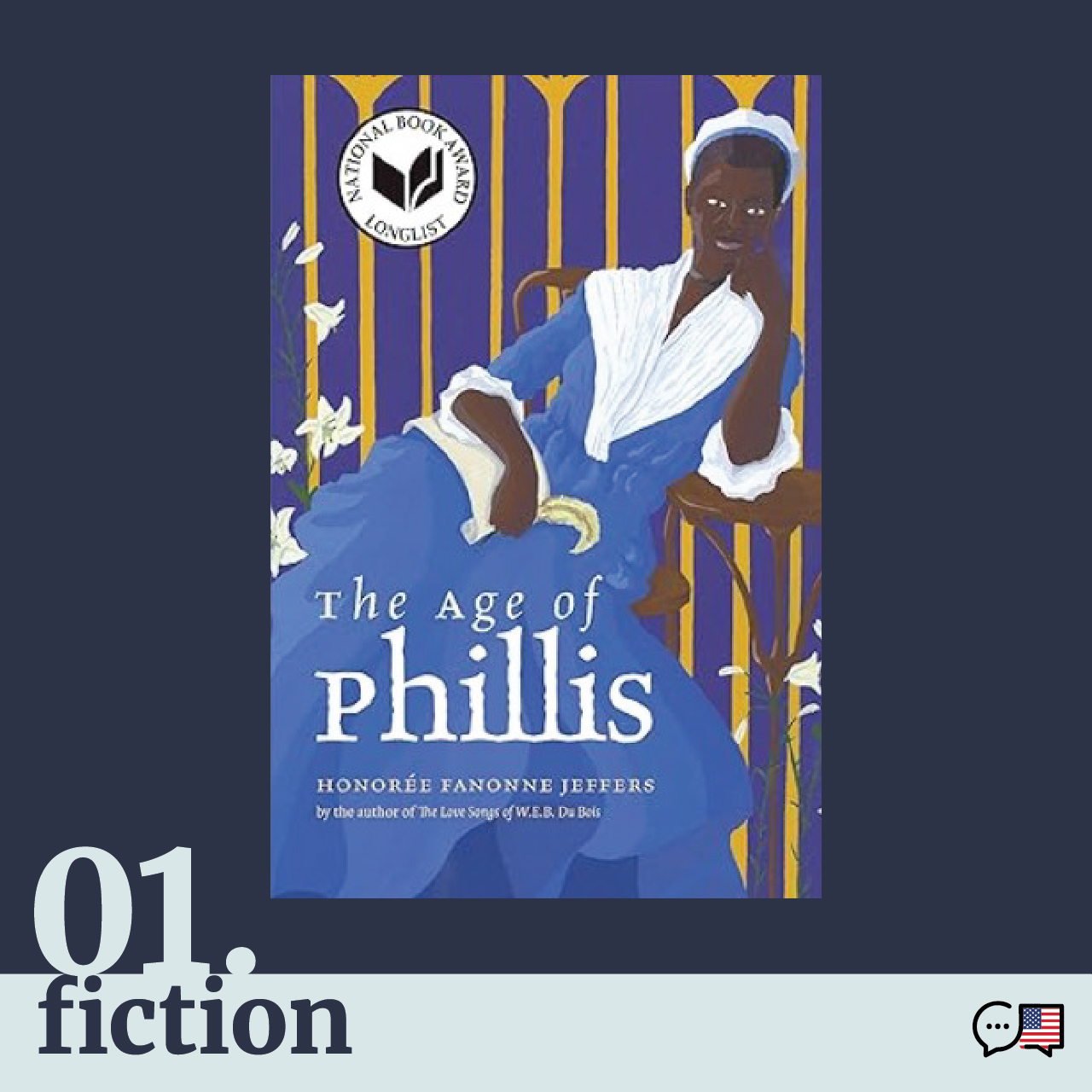
the age of phillis
Honorée Fanonne Jeffers spent fifteen years in archives reconstructing the life of Phillis Wheatley — African-born, enslaved, and the first African American to publish a volume of poetry in colonial America. What she built from that research isn't biography. It's a poetry collection that gives Wheatley something history couldn't: an interior life, thoughts, feelings, complexity, identity. The book opens in Africa, before the kidnapping, before the name Phillis was assigned to a child who already had one. That "before" is the whole argument.
If you're not a poetry reader, you might be surprised at how much you enjoy it. It's more accessible than you're expecting and it will do things to you that the history book cannot.
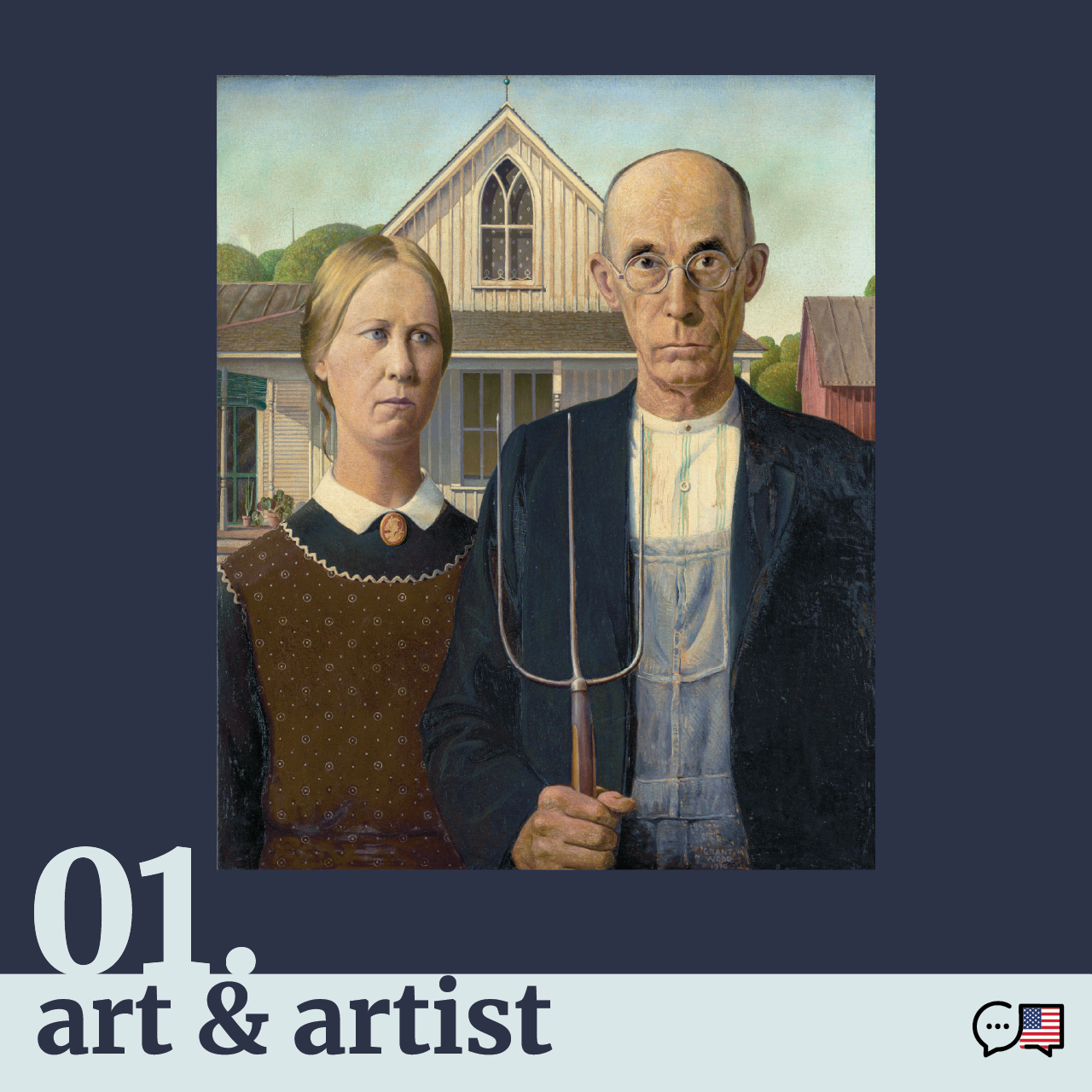
american gothic
You've seen this painting a thousand times. Grant Wood painted it in 1930 in rural Iowa. The subjects aren't a married couple; they're his sister and his dentist. Iowans were offended when it was finished; they thought he was mocking them. It was rejected before one curator at the Art Institute of Chicago saw something in it. Without that single person's eye, it might have disappeared entirely.
Instead it became one of the most recognized images in American art history. Parodied by everyone from the Simpsons to presidential campaigns. Wood never explained it, insisted it wasn't satire, and eventually distanced himself from what it had come to represent. The painting had already left him behind.
This is worth sitting with: the person who made the symbol lost control of what it meant. That's how symbols work — and it's exactly what happened to phrases like "We the People" and to the founding story itself.
how they work together
Each text begins with a "before." Lepore opens before the founding with what was already here. Jeffers opens in Africa, before the kidnapping, before the name Phillis was assigned to a child who already had one. Wood's painting has a before too; a specific window in Iowa, a rejected canvas, before it became a symbol nobody intentionally designed.
All three ask the same question from a different angle: who decides what gets to be foundational? And what happens to the fuller story when the official one takes hold?
That's Genre Dialogue. Each text does something the others can't. Together they make visible what none of them could alone.
Get the Complete Reading List
The full year of themes, novels, history books, and artists for In Dialogue with America—delivered monthly to the IDWA Studio, a hub for theme introduction videos, monthly reading guides, and reflection prompts.
1
explore
If you prefer to read and explore on your own or with an in-person group, this free level includes the reading list, personal reflection prompts, and a group starter kit.
2
engage
If you'd like to explore the materials with a virtual community, this paid tier offers monthly discussions, an app-based community, and an archive of content.
3
create
If you want more in-depth creative content, this paid tier offers both artists and non-artists a fuller creative experience.
Want to work with us?
FOR PRESS, MEDIA, OR COLLABORATION INQUIRIES

QUICK LINKS



Copyright 2026. Michelle Rene Hill. All Rights Reserved.
Three Ways to Participate
Whether you want to read on your own, join guided discussions, or explore through creative practice; there's a place for you here.

Praesent mattis, ipsum sit amet placerat dapibus, est eros tempor neque, nec elementum dui ipsum non elit. Curabitur feugiat lacinia orci, non rutrum quam dignissim ac. Donec laoreet bibendum ligula, ullamcorper consectetur dolor